
Hawthorne's Primrose
On the care and handling of a gifted, neurodivergent student

I’m on a Nathaniel Hawthorne kick, and I recommend that you go on one, too.
That’s especially true if you’re a highly-sensitive person, a writer, a parent, or a gifted, neurodivergent child.
Hawthorne is most famous for his novel, The Scarlet Letter, which I was forced to read as a junior in high school and about which I dutifully and perhaps insightfully wrote an essay.
But there’s so much more.
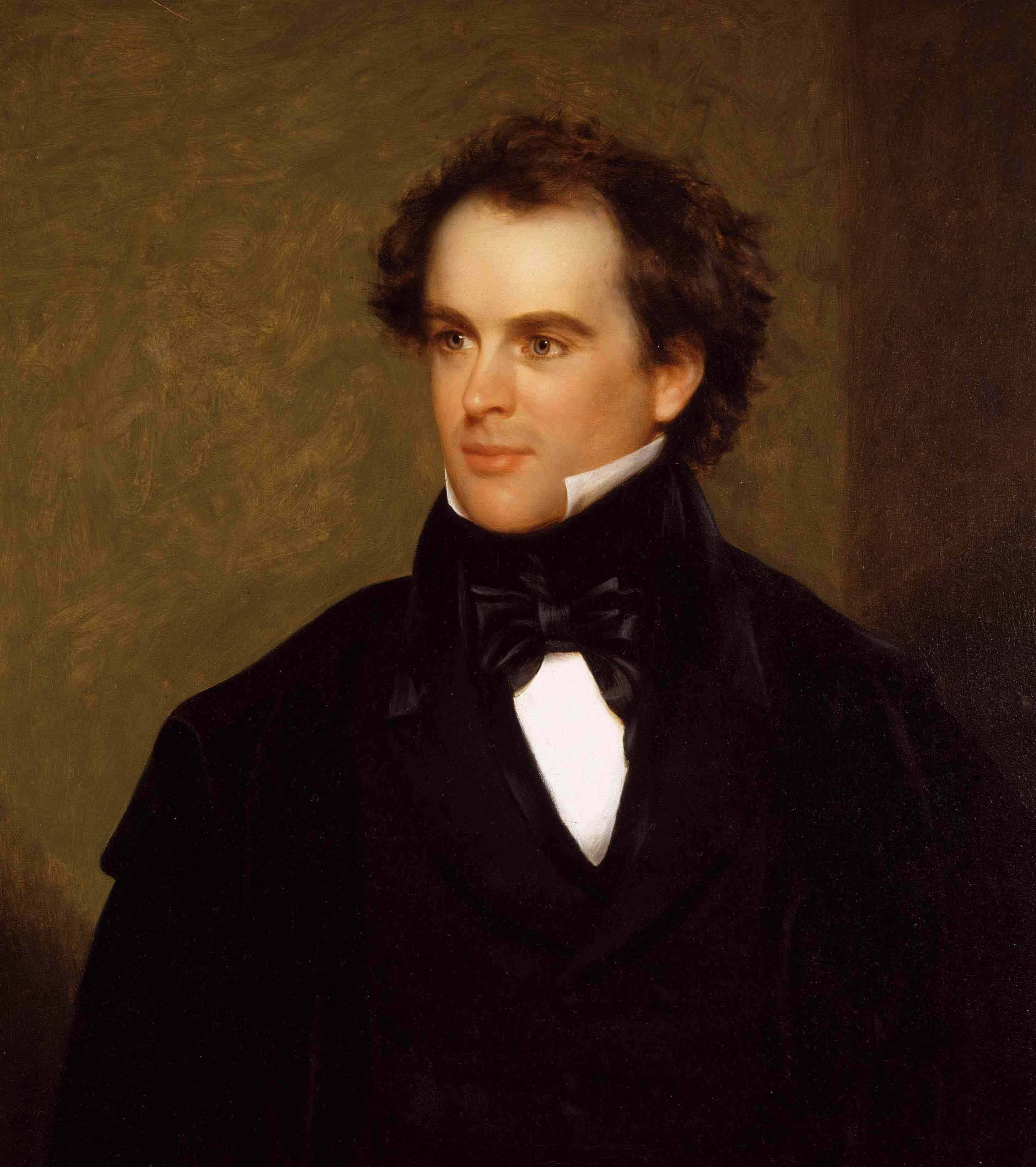
Most important for us mythology fans, there’s his A Wonder-Book for Girls and Boys, which is the first and most influential dedicated Greek mythology book designed for young readers. It is a story-within-a-story, where several fictional children listen to tales of Ancient Greece narrated by the fictional Eustace Bright, charismatic young college student.
(The sequel to this is Tanglewood Tales, which features the same characters but with different myths. More on this book below.)
One of the fictional characters, and for me the most fascinating, is Primrose Pringle, a 12-year old girl who is the de facto senior member of Eustace Bright’s mythology club. The rest of the kids, who are named things like Periwinkle, Cowslip, and Squash-Blossom, are younger. Only the girl Periwinkle, who is 10, approaches Primrose’s age.
Primrose’s personality fascinates me most, because Hawthorne so skillfully captures her to resemble one type of the many students I have taught: the gifted, neurodivergent child.
Perhaps you, also, know the type—maybe you are one, or were one, or are the parent of one. Regardless, this type of young person is a precious commodity in our troubled world, and deserves to be treated so that they grow up to be their authentic, beautiful selves.
Want more on education, neurodivergence, writing, and parenting? Subscribe to my email newsletter here.
First, what do I mean by gifted and neurodivergent? Some would just use the term “nerd,” but that would be using a much broader brush than necessary.
“Gifted” students are creative, intellectually curious, knowledge sponges, and/or connectors of seemingly unrelated concepts. Sure, it means “smart,” but there are many ways to be smart.
“Neurodivergent” can indicate any number of things, including autism and Attention Deficit Hyperactivity Disorder (ADHD), but in general it just means that the student thinks and processes differently (sometimes very differently) from the mainstream of his or her peers.
A neurodivergent student can just be someone who gets impatient with people who don’t share their interests or ways of thinking and processing, have a hard time sitting still and listening, all the way up to those who are socially awkward, and have no filter or impulse control.
How does Primrose Pringle fit into this definition?
Hawthorne most often uses the adjective “saucy” to describe Primrose. “Saucy,” in this context, is probably best defined as “having no filter.”
But in Primrose’s case, she is just being herself. It is clear that she knows a lot about Greek mythology, because after nearly every cutely-modified story that Eustace tells, she puts in a jab about how he’s not telling the canon version.
Primrose reminds me of a student I met when she was a rising sixth-grader, who entered my Latin class on her step-up day declaring “I’ve memorized all of Greek mythology.”
That student did not end up being “saucy,” but one of her sisters certainly did. The sister was not being disrespectful on purpose. She just had a lot to say, a lot of opinions, and a lot of knowledge.
Twelve-year olds are at an important time of their lives. They are leaving behind their “concrete operational,” fact-oriented, systematizing elementary-school brains and growing into their “formal logical operational” brains. They begin to trust less what they are told, to notice inconsistencies in what they are told, and to question what they see as exceptions to the systems they built when they were younger.
A gifted, neurodivergent student will be doing all this questioning at a younger age and with more frequency and intensity.
That’s why, for some of us experienced middle school teachers, we see seventh grade as “the trenches.” This is the year where whole classes will now and then mutiny academically until they are satisfied with the reasons they are taking the class.
One year a group of seventh graders asked me why they had to take Latin. I was ready with an incredibly effective and logical answer.
That didn’t stop them from asking me again and again and again.
But to return to Primrose herself.
After the Perseus story in A Wonder-Book, Primrose manages in just a couple of sentences not only to be disrespectful but to show off her knowledge of Greek mythology and to explain away the inconsistency around the one tooth of the Graeae, the old goddesses who help Perseus in his quest for the Medusa’s head:
“As to their one tooth, which they shifted about,” observed Primrose, “there was nothing so very wonderful in that. I suppose it was a false tooth. But think of your turning Mercury into Quicksilver, and talking about his sister! You are too ridiculous!”
“And was she not his sister?” asked Eustace Bright. “If I had thought of it sooner, I would have described her as a maiden lady, who kept a pet owl!”1
“Well, at any rate,” said Primrose, “your story seems to have driven away the mist.”
I love the way Eustace speaks to Primrose in a playful rather than corrective way. He recognizes that Primrose isn’t trying to be mean. She is engaged and focused on the material, the way a good student should be, even if a teacher would prefer not to be called “ridiculous.”

It’s likely Nathaniel Hawthorne created Primrose as a way of quieting his doubts about what he was doing. No one before had modified the stories for children in such a dramatic way. He really was in uncharted waters.
And in his brain, he thought he was doing something borderline inappropriate. This is part of genius: pushing the envelope, testing the boundaries of the accepted.
So Primrose is that voice in his head: is it really okay to change the stories of Greek mythology to suit an audience of a more tender age?
But Primrose is more than a device. Hawthorne was a father, and at the time of his writing he had three children, one of whom, Una, was a notoriously precocious, intense child.
So how does one deal with a gifted, neurodivergent child? Largely in the way that Eustace does: letting her speak her thoughts, even when they might fall into a level of disrespect, and remaining patient even when it is tempting to shut her down or shame her.
Especially when a remark hits home:
“Why, as to the story of King Midas,” said saucy Primrose, “it was a famous one thousands of years before Mr. Eustace Bright came into the world, and will continue to be so long after he quits it. But some people have what we may call ‘The Leaden Touch,’ and make everything dull and heavy that they lay their fingers upon.”
“You are a smart child, Primrose, to be not yet in your teens,” said Eustace, taken rather aback by the piquancy of her criticism. “But you well know, in your naughty little heart, that I have burnished the old gold of Midas all over anew, and have made it shine as it never shone before.
Later in A Wonder-Book, we meet Mr. Pringle, Primrose’s father, who is a “classicist,” which at least means someone educated in Greek and Latin, if not a full-fledged professor. In a moment where it is proven that the fruit does not fall far from the tree, Mr. Pringle echoes Primrose’s doubts about Eustace’s modifications, though in a more eloquent, pipe-and-tweed-jacket sort of way:
“…Pray let me advise you never more to meddle with a classical myth. Your imagination is altogether Gothic, and will inevitably Gothicize everything that you touch. The effect is like bedaubing a marble statue with paint. This giant, now! How can you have ventured to thrust his huge, disproportioned mass among the seemly outlines of Grecian fable, the tendency of which is to reduce even the extravagant within limits, by its pervading elegance?”
“I described the giant as he appeared to me,” replied the student, rather piqued. “And, sir, if you would only bring your mind into such a relation with these fables as is necessary in order to remodel them, you would see at once that an old Greek had no more exclusive right to them than a modern Yankee has. They are the common property of the world, and of all time. The ancient poets remodeled them at pleasure, and held them plastic in their hands; and why should they not be plastic in my hands as well?”
Mr. Pringle could not forbear a smile.
There is so much to unpack here, but I will only bring your attention to the word “piqued,” which means “stung” or “hurt” by criticism. The only other time that word occurs in A Wonder-Book is in the quote about Midas, where the mini-Pringle takes a poke at Eustace in a similar way.
In Tanglewood Tales, the children no longer interact with Eustace. There’s no story within a story anymore, just the myths themselves. To me, this is a pity, because that part of A Wonder-Book, with its descriptions of the seasons of western Massachusetts, is just as enjoyable to read as the myths themselves.
And there would be still so much to learn from the children’s reactions to the tales.
However, the introduction to Tanglewood does contain a conversation between Hawthorne and his Bright literary creation, and it includes this little update:
Primrose is now almost a young lady, and, Eustace tells me, is just as saucy as ever. She pretends to consider herself quite beyond the age to be interested by such idle stories as these; but, for all that, whenever a story is to be told, Primrose never fails to be one of the listeners, and to make fun of it when finished.
That also tallies with my experience with the gifted, neurodivergent child. They do not “grow out of” the things that fired their imagination when they were younger, but see them in a different, almost nostalgic light.
I am always impressed at how this type of student grows as the years go by. I imagine Primrose to have grown up and done many important things in her life, and I hope that Hawthorne would have had her check in with Eustace later to celebrate all those things.
The “sister” to whom Eustace and Primrose are referring is the goddess Athena.